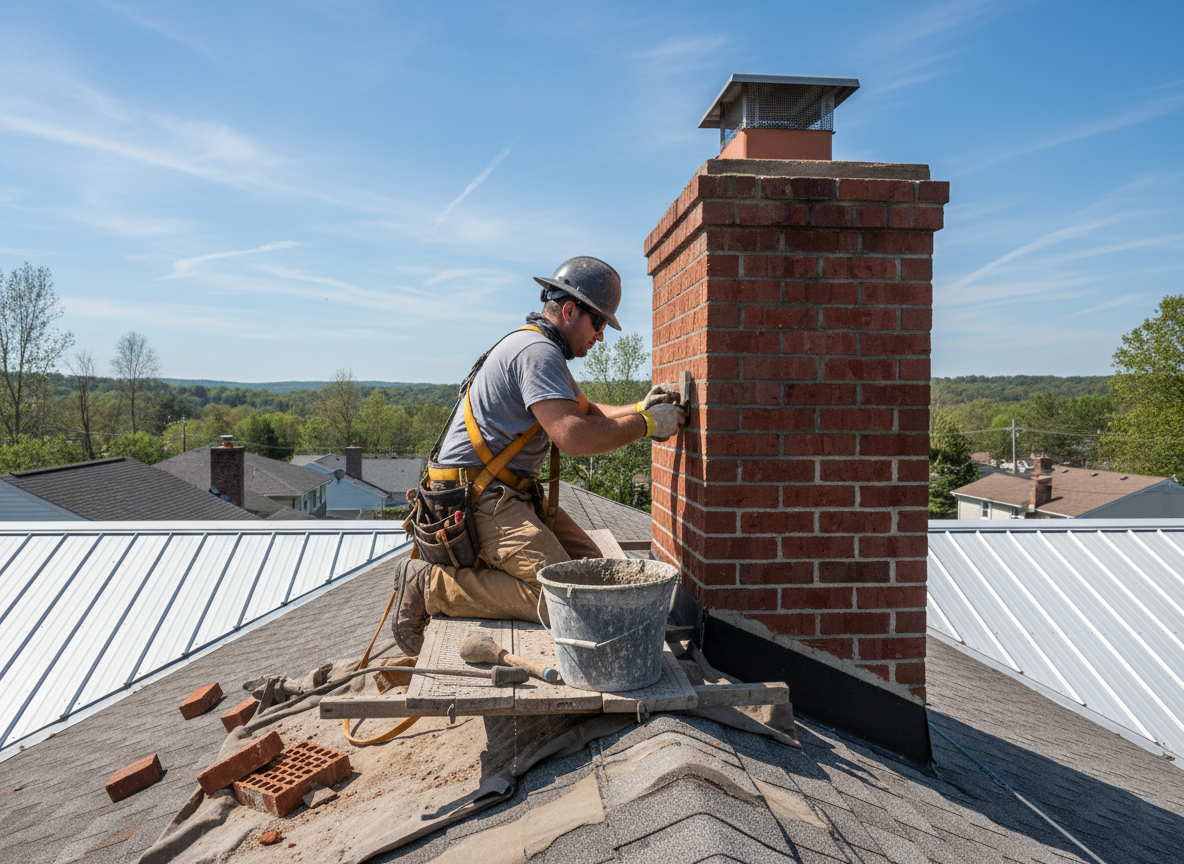
Blue Ash homes built from the 1950s through the 1970s often feature brick chimneys integrated with asphalt shingle roofs that suffer from repeated freeze-thaw cycles common in Hamilton County winters. Water infiltrates at the step flashing or cricket where the chimney meets the roof plane, leading to rotted sheathing and ceiling stains inside. Repair work here requires removing compromised flashing, installing new lead or copper step flashing sealed with high-temperature caulk rated for Ohio temperature swings, and rebuilding the crown with a slope that sheds snow load rather than trapping ice.
Edge cases appear frequently on split-level and ranch homes near Plainfield Road where the chimney chase sits close to the ridge. In these setups, improper counter flashing allows wind-driven rain from summer thunderstorms to bypass the seal and run down the flue liner. Technicians must verify the existing liner condition before re-roofing because many original clay tiles have cracked from decades of heating and cooling. When the roof pitch exceeds 8:12, additional cricket construction becomes necessary to prevent snow accumulation against the chimney back.
Hamilton County building practices require permits for any chimney work that alters the roof structure, and inspectors check for proper clearance from combustible materials when new flashing is installed. Homeowners in neighborhoods such as Montgomery and Evendale often discover hidden damage only after a heavy spring rain following winter ice dams. Addressing the roof-to-chimney junction before re-roofing prevents repeated leaks that can compromise the entire attic insulation package.
Materials matter on these jobs because standard aluminum flashing fails quickly under the acidic runoff from cedar or asphalt shingles common in Blue Ash. Copper or stainless step flashing paired with a stainless chimney cap holds up better against the region's salt air influence from nearby Cincinnati industrial corridors. Always inspect the mortar joints in the upper chimney stack at the same time, as loose bricks allow water to enter the flue and accelerate corrosion of the liner.
Technician insight
In Blue Ash, the thing that catches most people out with roof chimney repair is how the 1960s ranch homes along Plainfield Road have shallow roof pitches that let ice dams push water right under the step flashing every winter, and homeowners keep patching from inside instead of fixing the roof junction before the sheathing rots.
Montgomery Home Chimney Leak
Water stains appeared on the second-floor ceiling after a March thaw. Inspection revealed deteriorated aluminum flashing on a 1964 brick chimney where it met the asphalt roof. We removed the old flashing, installed new copper step flashing and a rebuilt crown, then verified the liner was still sound. The homeowner reported no further leaks after the next heavy rain.
How it works
- 1
Site Inspection
Technician climbs the roof to assess flashing, crown, cricket, and liner condition while noting roof pitch and surrounding tree cover.
- 2
Material Selection
Match existing roofing type and select appropriate step flashing and sealant rated for Blue Ash freeze-thaw exposure.
- 3
Leak Repair Execution
Remove old flashing, install new step and counter flashing, rebuild crown if needed, and seal all penetrations.
- 4
Final Verification
Water test the repaired area and document condition for the homeowner before leaving the site.
Pricing
Upfront quotes provided after on-site inspection; cost varies with roof pitch, chimney height, and extent of hidden water damage.