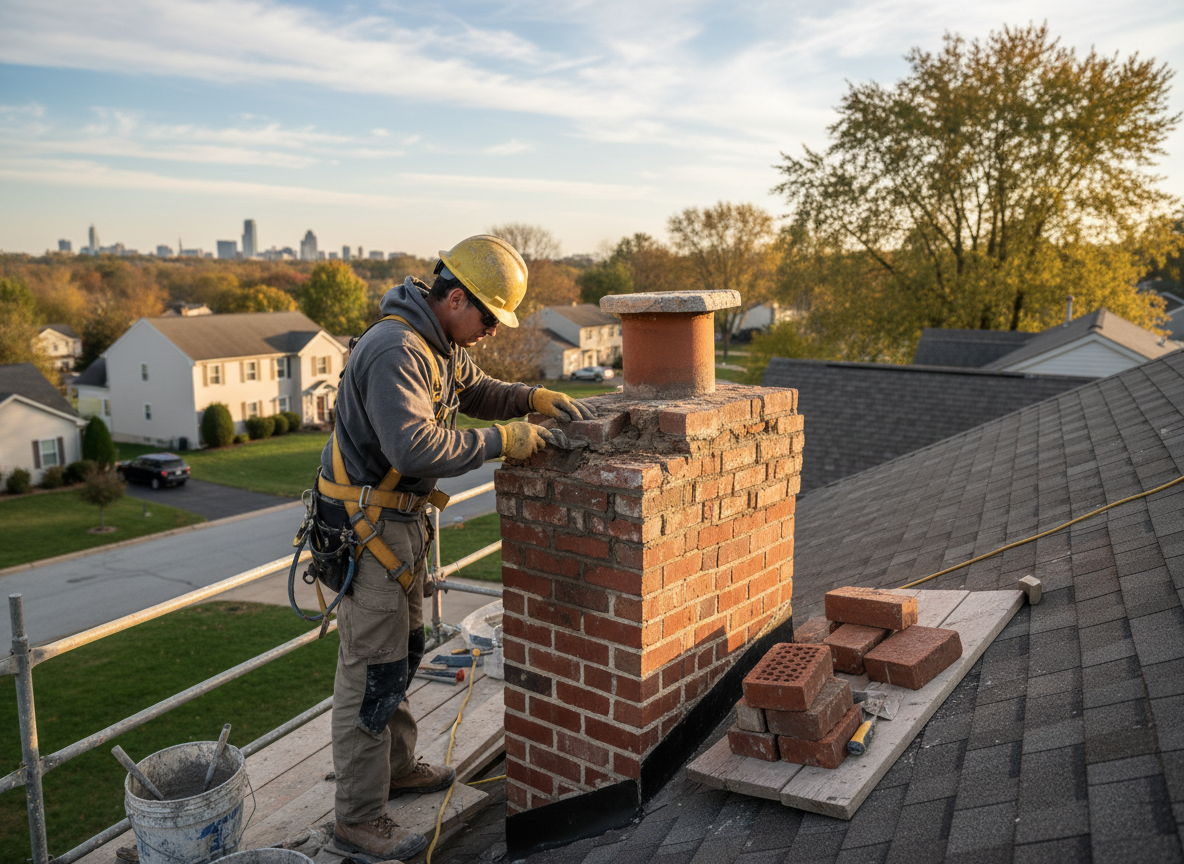
Blue Ash sits in Hamilton County where homes built from the 1950s through the 1970s often feature single-wythe brick chimneys tied into the original masonry. Repeated freeze-thaw cycles push moisture into hairline cracks, then expand and spall the brick faces. Homeowners notice missing mortar joints or white efflorescence first, then water stains on the firebox or attic sheathing. We assess the full stack from crown to cleanout, checking for settlement cracks that run diagonally because the clay soils here shift after heavy spring rains.
When repointing we remove only the failed mortar to a consistent depth of three-quarters of an inch so new Type N mortar bonds properly without trapping moisture behind the old joint. Flue tiles that have shifted from roof movement get realigned before the crown is recast with a slope that sheds water away from the flue opening. We also install stainless-steel rain caps sized to the flue to cut down on the volume of snow and sleet that reaches the smoke chamber during Cincinnati-area lake-effect events.
Edge cases we see regularly include chimneys that share a wall with a neighbor’s addition in the Montgomery or Sycamore Township sections of Blue Ash. Those shared walls limit scaffold access and require interior staging through the attic. We never parge over active cracks; instead we chase them out and install helical ties when lateral movement exceeds one-quarter inch. Every repair leaves the flue clear for inspection with a camera so the next technician can verify the masonry work did not encroach on draft space.
Technician insight
In Blue Ash the thing that catches most people out with chimney masonry repair is how fast the 1960s brick starts to spall once the crown lets water in. The freeze-thaw cycles here open a joint in one winter and push the face off the brick the next; if you wait until you see water in the attic the stack is usually further gone than it looks from the ground.
Leaking Chimney on Plainfield Road
Water stains appeared on the ceiling after a January thaw. Inspection showed deteriorated crown and open mortar joints allowing meltwater into the flue. We removed the failed crown, repointed the upper six courses, and recast a sloped crown with integral flashing. Follow-up camera check confirmed the flue was dry and clear.
How it works
- 1
Initial Assessment
We arrive within hours, inspect from crown to cleanout, and document every cracked joint or spalled brick with photos and notes.
- 2
Mortar and Brick Removal
Failed mortar is cut out to proper depth and damaged bricks are replaced with matching units so the stack remains stable.
- 3
Repointing and Crown Work
New mortar is placed, the crown is recast with proper slope, and any flue tiles are realigned before sealing.
- 4
Final Camera Check
A post-repair camera sweep confirms the flue is clear and water intrusion points have been addressed.
Pricing
Cost depends on height, number of joints, and whether brick replacement or crown work is required.