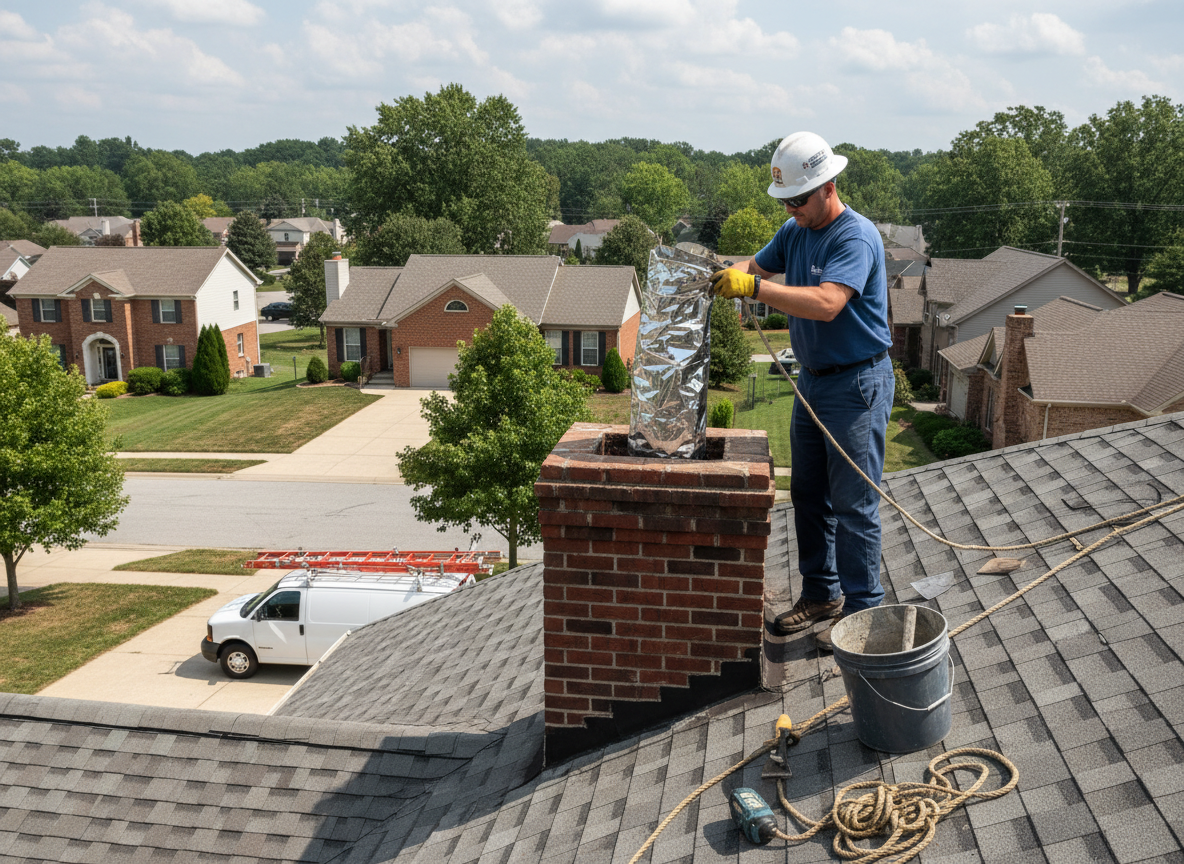
Blue Ash sits on a mix of 1960s ranch and split-level homes plus earlier brick two-stories along Plainfield Road and the neighborhoods around Summit Park. Many of these chimneys were built without modern liners or with clay tile that has cracked after decades of Ohio freeze-thaw cycles. Relining with a stainless-steel or cast-in-place liner restores a continuous flue, improves draft, and meets current IRC requirements for solid-fuel appliances.
The job starts with a camera inspection to locate offsets, creosote buildup, and water damage from missing caps or deteriorated crowns. In Blue Ash the clay soil and rolling terrain around the Little Miami corridor often direct roof runoff straight at the chimney base, so we frequently find spalled bricks and rusted flue tiles that must be addressed before the new liner goes in. We choose 304 or 316 stainless based on fuel type and install insulation where clearance to combustibles is tight.
Edge cases we see regularly include zero-clearance fireplaces that were added later and require a different liner diameter, and multi-story flues with sharp bends that need flexible connectors. We also handle the occasional masonry chimney that has been parged on the inside, which must be removed before a new liner can seat properly. All work is done from the roof and cleanout door; no interior demolition is required unless the smoke chamber itself has collapsed.
Homeowners in Blue Ash often notice slow draft or odors after heavy rain. These signs usually trace back to missing rain caps or open mortar joints that let water reach the liner. Relining solves the draft problem and stops further water intrusion when paired with a new crown and cap.
Technician insight
In Blue Ash the thing that catches most people out with chimney relining is how many 1960s split-levels have a clay-tile flue that was never lined and sits right where roof runoff from the low-slope section hits the chimney. One good freeze-thaw winter and the tiles start spalling; homeowners smell smoke after rain but assume the fireplace itself is the problem.
Split-Level on Kenwood Road
The owner reported smoke backing into the family room after storms. Camera showed cracked clay tiles and standing water at the smoke chamber. We removed loose material, installed a 6-inch stainless liner with insulation, rebuilt the crown, and added a chase cap. Draft returned to normal and the odor disappeared.
How it works
- 1
Camera Inspection
We scope the full flue from top to bottom, note offsets, creosote, and water damage, then review findings on-site.
- 2
Measurement and Liner Selection
Exact flue diameter and length are recorded; we select stainless or cast-in-place material suited to the appliance and fuel.
- 3
Installation
Old debris is removed, the new liner is lowered or poured, and insulation is added where required for clearance.
- 4
Final Test and Documentation
Draft is verified with a smoke test; photos and measurements are provided for the homeowner's records.
Pricing
Cost depends on flue height, diameter, number of bends, and whether a crown rebuild is required; we provide an upfront written quote after inspection.