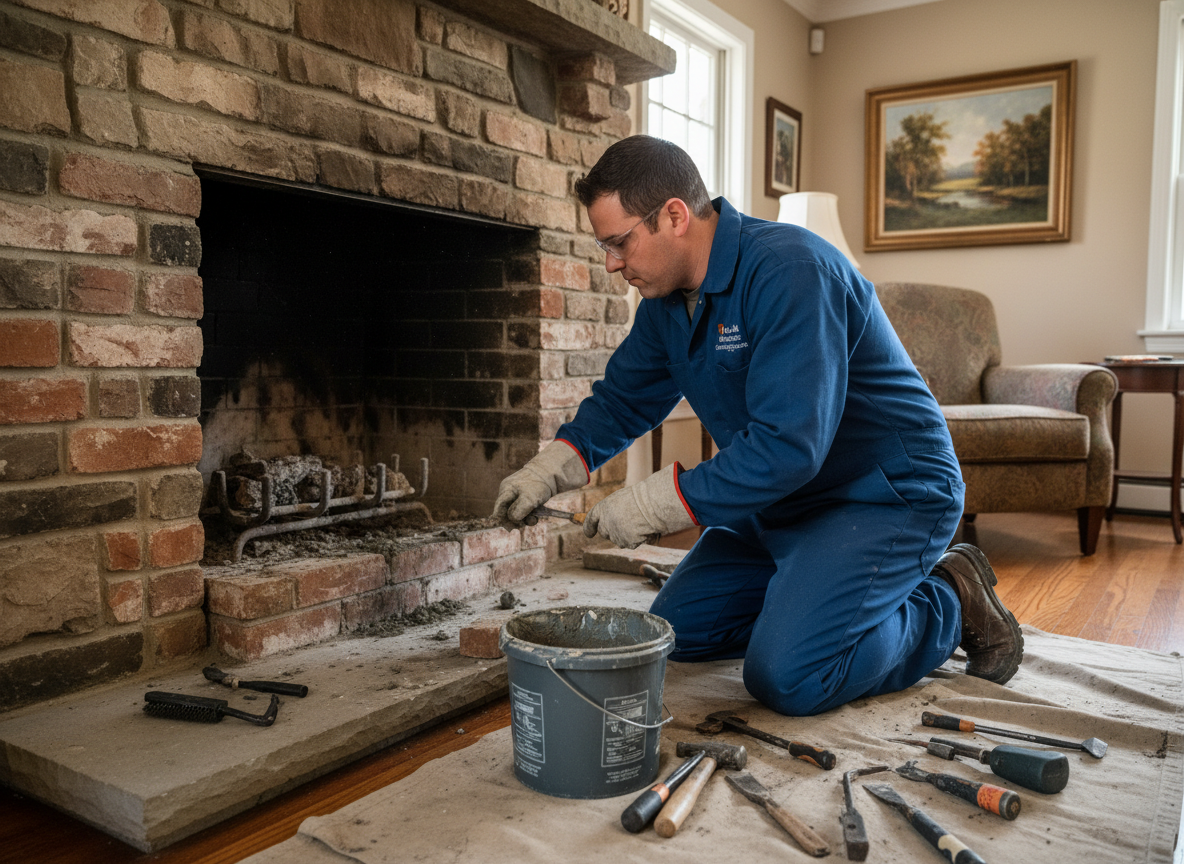
Blue Ash homes built from the 1950s through the 1970s often feature masonry fireplaces that have endured decades of freeze-thaw cycles common in Hamilton County. Moisture enters through hairline cracks in the firebox or damper, then expands when temperatures drop below freezing, widening gaps and allowing smoke to leak into living spaces. Repair work here typically requires removing loose brick or refractory panels, cleaning out deteriorated mortar, and rebuilding with materials rated for direct flame contact rather than standard cement.
Many properties near Plainfield Road and the surrounding Montgomery area sit on clay-heavy soils that shift slightly with seasonal moisture changes. This movement can misalign the damper frame or crack the smoke shelf, issues that only become obvious once a fire is lit. Technicians check the entire throat and lintel for hidden spalling before any patching begins, because a quick surface fix will fail again after the next hard freeze.
Fireplace repair also involves verifying that the chimney crown and flashing still shed water properly. In Blue Ash, heavy spring rains followed by sudden cold snaps frequently push water behind the masonry, rotting wooden lintels in older capes and ranches. Addressing the fireplace without inspecting the crown and flashing above it leads to repeated callbacks once water finds the new repair.
Technician insight
In Blue Ash, the thing that catches most people out with fireplace repair is how the freeze-thaw cycles along the clay soils near Plainfield Road push water behind the firebox in pre-1980 homes; homeowners often think a new damper will fix smoke leaks when the real problem is hidden mortar loss higher in the throat.
Smoke Leak in Blue Ash Cape Cod
Homeowner reported smoke entering the room on cold nights. Inspection showed cracked firebox mortar and a shifted damper caused by years of moisture from the clay soil. Crew rebuilt the firebox with refractory materials and realigned the damper. The fireplace now drafts cleanly without leaks.
How it works
- 1
Initial Inspection
Technician examines the firebox, damper, smoke shelf, and visible flue from inside the home and at the roofline.
- 2
Diagnosis and Quote
Findings are explained on site with photos; an upfront price is given before any work begins.
- 3
Repair Execution
Damaged masonry or components are removed and rebuilt using high-temperature refractory materials matched to the original construction.
- 4
Final Check and Cleanup
A test fire confirms proper draft and smoke containment; the work area is left clean.
Pricing
Upfront quotes are provided after inspection; pricing depends on the extent of masonry damage and whether the damper or smoke shelf requires rebuilding.