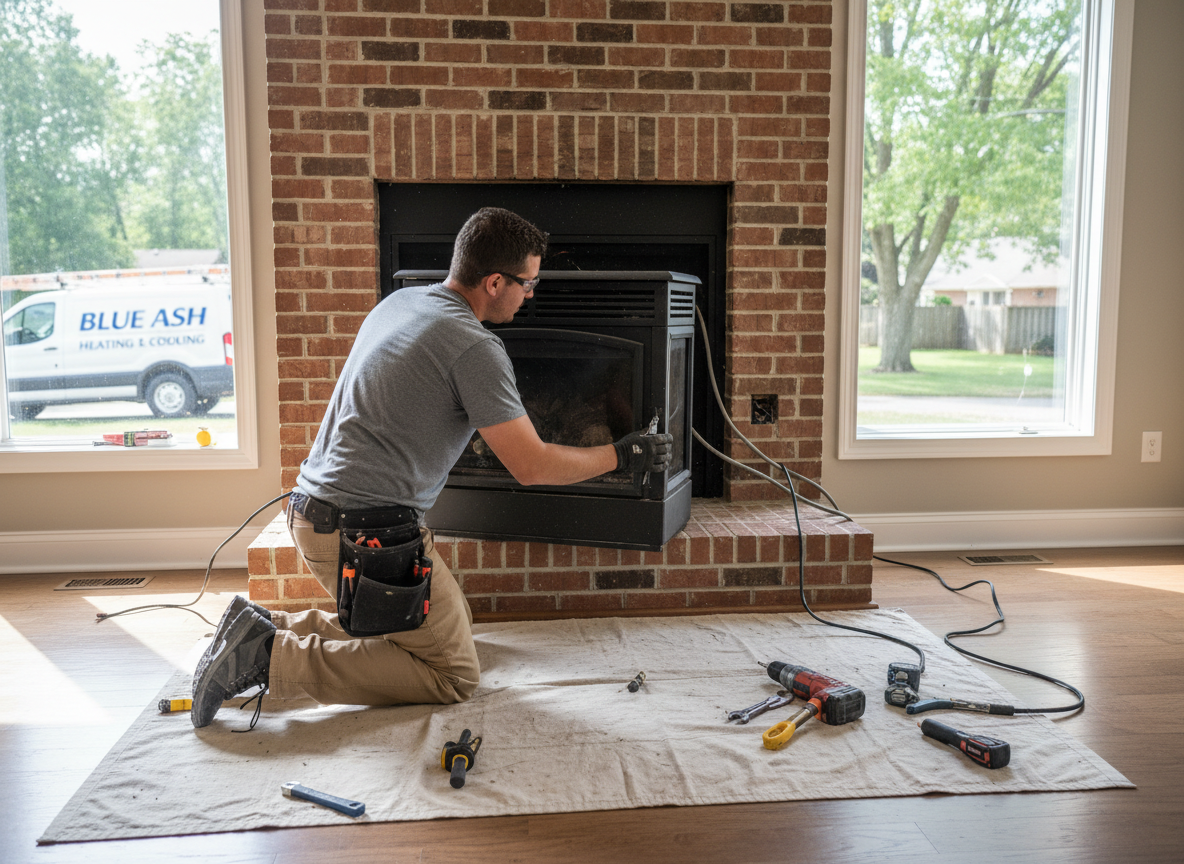
Blue Ash homes often feature mid-century masonry chimneys tied to the original build, and adding a fireplace requires checking flue alignment against the roof pitch common in the area. Installers must account for the freeze-thaw cycles that shift mortar joints over decades, especially on north-facing exposures near the Plainfield corridor. Proper clearance to combustible framing and correct liner sizing prevent draft failures that show up once winter temperatures drop below freezing. We verify the chimney crown condition and rain cap fit before any new unit goes in, because water intrusion through an aging flue is the most frequent follow-up call after an install.
Gas or wood-burning inserts change the draft dynamics inside an existing chimney, so we calculate the correct vent height relative to nearby rooflines in neighborhoods like those around Summit Park. Older Blue Ash foundations can settle unevenly due to the clay-heavy soil, tilting the chimney slightly and creating offset issues that standard kits do not address. We use stainless-steel liners sized to the appliance output and seal the connection at the smoke chamber to keep carbon monoxide from migrating into living spaces. Every job includes a final draft test under actual operating conditions before we leave the site.
Local permitting in Hamilton County requires the new fireplace to meet current IRC standards for hearth extension and spark guard, details that vary by the age of the home. We coordinate the inspection timing so the work passes on the first visit, avoiding extra trips during peak heating season. Homeowners in the Blue Ash area frequently request direct-vent models to avoid modifying the original masonry stack; these units still need proper termination clearance from windows and doors common on split-level layouts here.
Technician insight
In Blue Ash, the thing that catches most people out with fireplace installation is the slight chimney lean common on homes built on the clay soils around Plainfield Road; if you do not correct the offset before setting the new unit, the liner binds and draft suffers once the first cold snap hits.
Offset Chimney on Blue Ash Split-Level
Homeowner requested a direct-vent fireplace in a 1960s Blue Ash house. We found the chimney had settled enough to create a two-inch offset at the smoke chamber. We installed an adjustable liner section to restore straight alignment, sealed the connection, and tested the unit. The fireplace now draws correctly without backdraft during winter winds.
How it works
- 1
Initial Site Assessment
We inspect the existing chimney structure, measure flue dimensions, and check roof access points at the Blue Ash address.
- 2
Appliance and Vent Selection
We match the fireplace model to the home's chimney capacity and confirm liner or direct-vent requirements.
- 3
Installation and Integration
We set the unit, run the vent system, seal connections, and verify clearances to local code.
- 4
Testing and Handover
We perform a live draft test, review operation with the homeowner, and schedule any follow-up inspection.
Pricing
Upfront quotes after inspection; cost varies with chimney condition and appliance type.