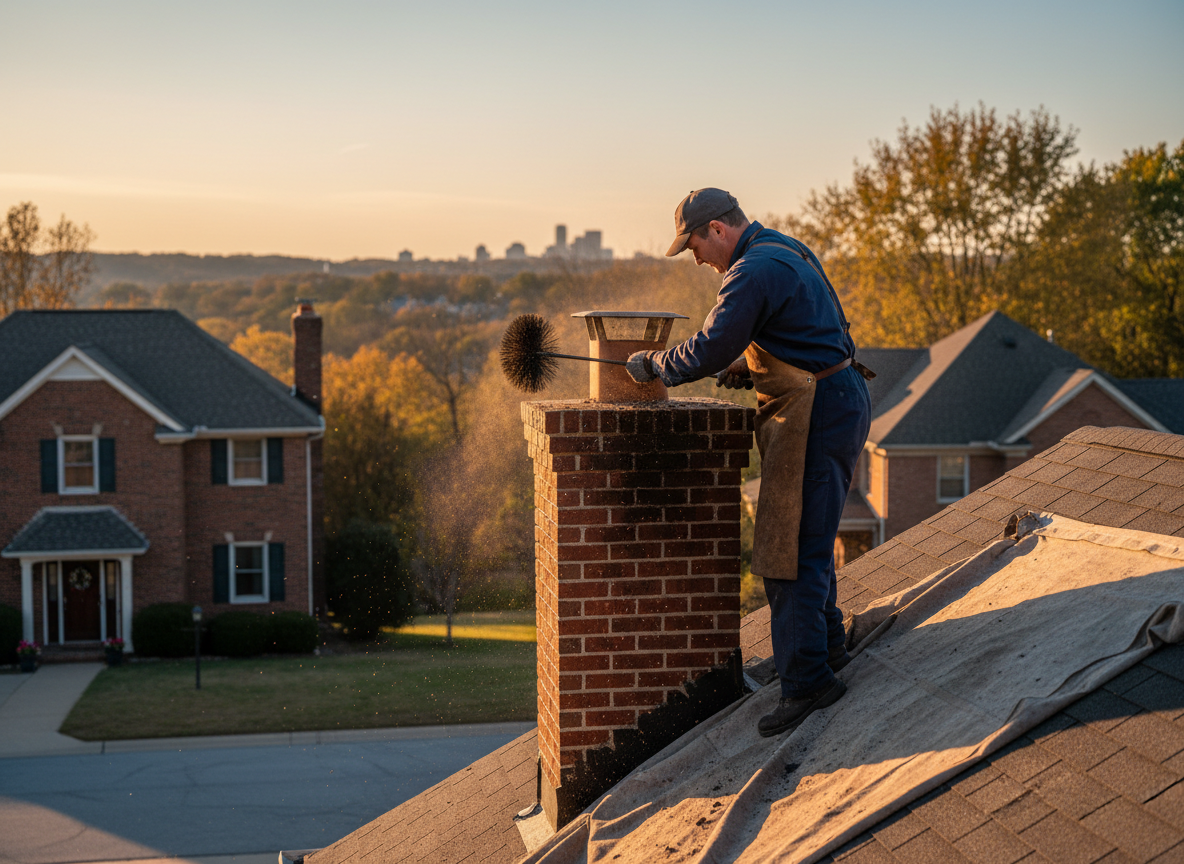
Blue Ash homes built from the 1950s through the 1980s typically feature masonry chimneys tied to wood-burning fireplaces. These flues accumulate dense creosote layers during long Ohio winters when homeowners run fires daily. A proper sweep reaches every flue surface with stiff brushes sized to the actual liner diameter, breaking up the glaze that forms from burning seasoned hardwood common in the area.
Freeze-thaw cycles in Hamilton County push moisture through mortar joints, loosening crown caps and allowing water to reach the smoke chamber. During a sweep we inspect for these hairline cracks that standard visual checks miss. We also clear the smoke shelf of ash and debris that restricts draft on two-story homes common along Plainfield Road and surrounding neighborhoods.
Modern inserts and wood stoves installed in older Blue Ash chimneys create narrower flues that trap more soot. Sweeping these requires smaller-diameter brushes and extra care around stainless liners to avoid scoring. We always verify the chimney cap remains secure afterward, since high winds off the nearby golf course can dislodge loose caps and let animals enter.
Seasonal Guidance
Schedule sweeps before the first hard freeze in late fall. Waiting until January often means working around ice dams that form on the crown, complicating access and increasing the chance of dislodging already-fractured bricks.
Technician insight
In Blue Ash, the thing that catches most people out with chimney sweep is the heavy creosote that builds up fast in the 1960s and 1970s brick chimneys when they burn oak all winter. Those older flues often have offset sections that standard brushes miss unless you know the exact angles common on Plainfield Road homes.
Hidden Offset in a Two-Story Chimney
Homeowner in Blue Ash noticed slow draft after several weeks of fireplace use. We found a sharp offset in the flue that had collected thick creosote the previous sweep missed. After running a smaller rotary head through the offset and clearing the smoke shelf, draft returned to normal and the fireplace could be used safely again.
How it works
- 1
Site Assessment
We examine the chimney exterior from the ground and roof, checking for loose bricks, damaged flashing, and cap condition on homes in Blue Ash.
- 2
Flue Preparation
Furniture and flooring are protected with drop cloths before the brush and vacuum system is set up at the fireplace opening.
- 3
Mechanical Sweeping
Rotary brushes sized to the flue remove creosote and debris while the vacuum captures airborne particles throughout the process.
- 4
Final Inspection and Cleanup
The smoke chamber and shelf are cleared, the cap is verified secure, and all equipment is removed with the work area restored.
Pricing
Pricing depends on chimney height, number of flues, and creosote thickness; we provide an upfront quote after the initial assessment.