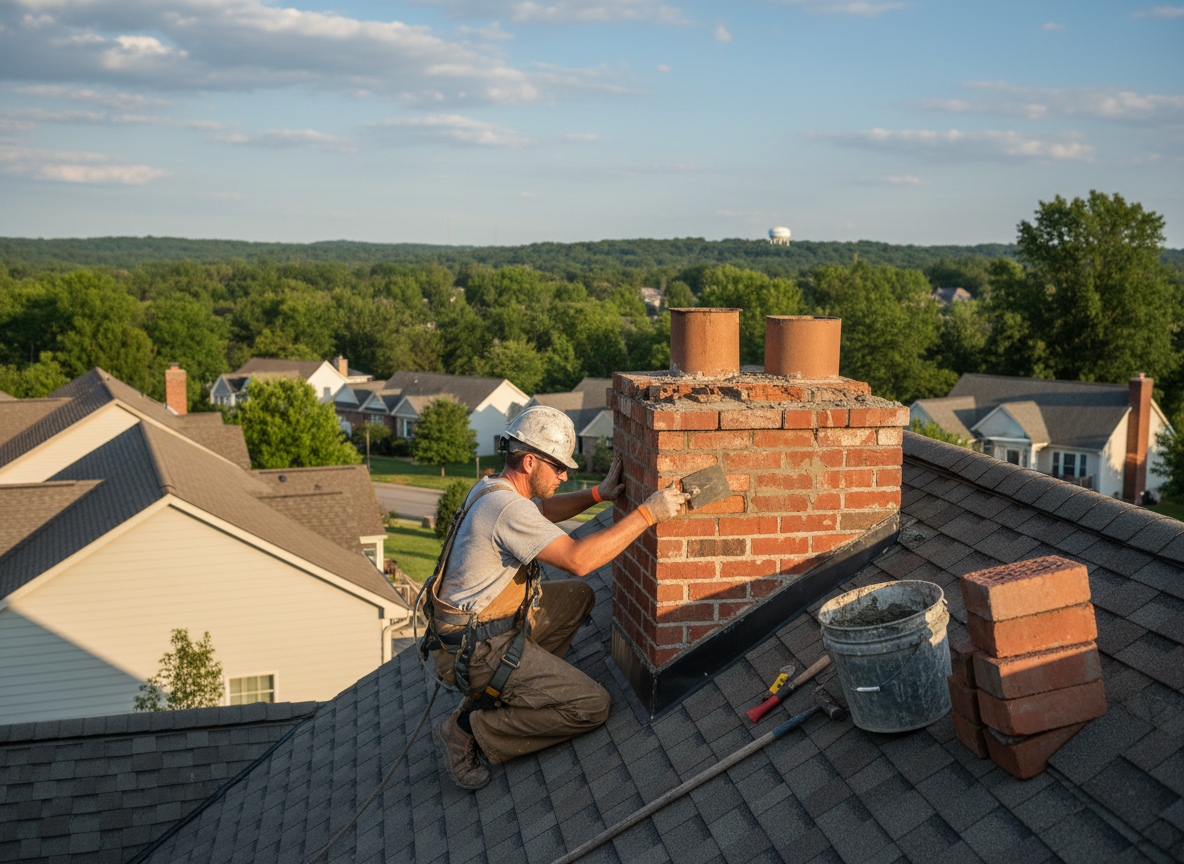
Blue Ash sits in Hamilton County with many mid-century brick homes whose chimneys face repeated freeze-thaw cycles each winter. Mortar joints and crowns expand and contract, allowing water to enter behind the flue liner and reach interior framing. Homeowners often notice staining on ceilings or musty odors before realizing the crown has separated from the flue. Proper repair requires removing loose material, installing stainless steel ties, and repointing with type N mortar matched to the original brick rather than modern high-strength mixes that can cause further cracking.
Flashing around the roofline is another frequent failure point in this area. Many roofs in the Plainfield Road corridor and nearby Montgomery neighborhoods use asphalt shingles that have settled over decades, creating gaps where step flashing no longer seals. When heavy spring rains hit, water tracks down the chimney exterior and into the attic. Technicians must pull back shingles carefully, install new counter flashing, and reseal without disturbing the existing underlayment to avoid creating new leak paths.
Creosote buildup combined with Ohio humidity accelerates liner deterioration in wood-burning fireplaces still common in Blue Ash. A cracked clay liner can allow carbon monoxide to migrate into living spaces. Replacement with a stainless steel liner sized to the appliance and properly insulated prevents both gas leakage and rapid cooling that leads to condensation. Work must follow Hamilton County permit requirements for solid-fuel appliances and include a final draft test before the system is returned to service.
Technician insight
In Blue Ash the thing that catches most people out with chimney repair is the hidden water damage behind the crown on 1960s brick homes. Freeze-thaw cycles along the Plainfield corridor open mortar joints that look fine from the ground, letting water reach the attic framing before any interior stain appears.
Crown Separation on a Blue Ash Split-Level
Homeowner called after noticing ceiling stains following a March rain. Inspection revealed the chimney crown had pulled away from the flue on a 1968 brick home near 9000 Plainfield Rd. Crew removed the failed crown, installed new stainless ties and a reinforced concrete cap, then repointed the upper courses. No further moisture reached the attic after the repair.
How it works
- 1
Initial Assessment
Technician arrives at the Blue Ash address and inspects the chimney exterior, roofline, and firebox for visible cracks, missing mortar, and water stains.
- 2
Detailed Evaluation
Camera inspection of the flue and moisture meter readings on surrounding framing identify the full extent of damage before any repair plan is finalized.
- 3
Repair Execution
Crew removes deteriorated material, installs appropriate liners or flashing, repoints joints, and restores the crown using materials suited to local freeze-thaw exposure.
- 4
Final Verification
System is tested for draft and gas tightness, then the homeowner receives a written summary of work performed and recommended maintenance intervals.
Pricing
Upfront quotes provided after on-site inspection; final price depends on liner condition, height, and access.