2026-10-23 ·
Signs of Chimney Damage After Ohio Winter Freeze Thaw Cycles
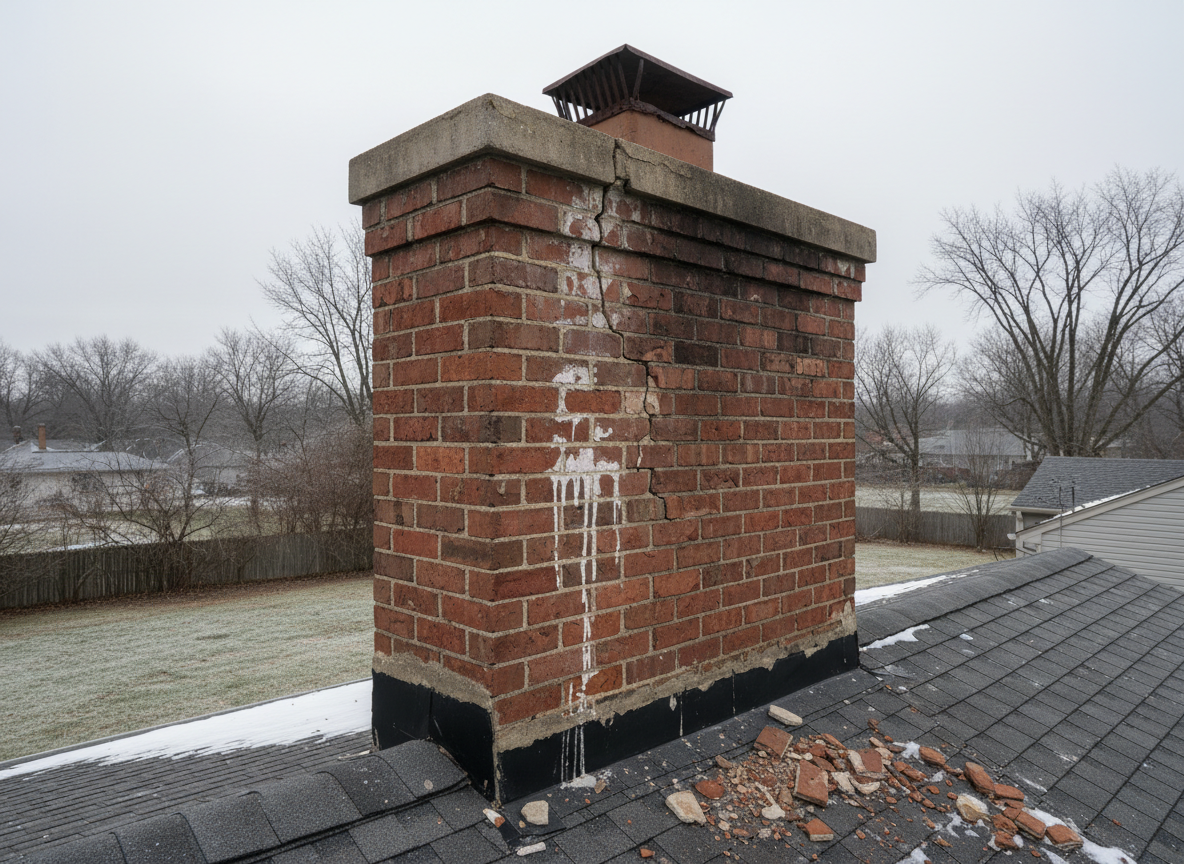
Ohio freeze-thaw cycles produce visible chimney damage in Blue Ash homes through repeated expansion and contraction of moisture trapped in masonry. Cracked crowns, spalling bricks, loose mortar joints, and interior water stains appear most often after several weeks of fluctuating temperatures between freezing and above-freezing conditions. These patterns show up first on south-facing and west-facing chimneys exposed to direct sun during the day followed by rapid nighttime drops.
How Freeze-Thaw Cycles Damage Blue Ash Chimneys
Blue Ash sits in Hamilton County where winter temperatures swing across the freezing point dozens of times each season. Water enters small openings in mortar or crown masonry, expands when it freezes, and widens those openings on each thaw. Over multiple cycles the damage compounds, especially on older brick chimneys found in neighborhoods such as Kenwood, Montgomery, and Sycamore Township. Homeowners notice white efflorescence on brick surfaces, vertical cracks running through the crown, and pieces of mortar falling onto the roof or ground. The same cycles also affect metal flashing where it meets the roof, allowing water to reach interior walls during later thaws. Chimney masonry repair addresses the loosened joints before water reaches the flue liner or living space.
Visible Exterior Signs After Winter Cycles
Inspect the chimney from the ground and roof level for spalling where brick faces flake off due to internal ice pressure. Check the crown for hairline cracks that widen after repeated freezes and look for missing or shifted bricks along the top courses. In Blue Ash homes built before 1980, original mortar often lacks modern additives that resist moisture absorption, making these chimneys more vulnerable. Water stains on the exterior brick or white powdery deposits indicate ongoing moisture movement through the masonry. Damaged flashing around the chimney base frequently appears after winter as metal contracts and expands with temperature changes. Early detection prevents the need for more extensive work such as full crown replacement or liner replacement later in the season.
Interior and Functional Warning Signs
Inside the home, brown or yellow water stains on ceilings near the chimney chase signal that freeze-thaw damage has allowed water past the crown or flashing. A damp or musty smell near the fireplace after a thaw points to moisture trapped in the flue. Draft issues or smoke backing into rooms can result when cracked mortar allows cold air infiltration or when debris from spalled bricks blocks the flue. In neighborhoods such as Deer Park and Madeira, older stone and brick chimneys show these interior signs more frequently because the original construction did not include modern waterproofing layers. Chimney leak repair becomes necessary once water reaches living areas. For context on related spring risks, see Preventing Water Leaks in Chimneys During Cincinnati Area Spring Storms.
Next Steps for Blue Ash Homeowners
Schedule a visual inspection once daytime temperatures remain above freezing long enough to melt accumulated ice. Document any new cracks or missing mortar with photos for comparison after the next cold snap. Homes in Pleasant Ridge and Evendale often require tuckpointing or crown sealing within five to eight years after initial freeze-thaw damage appears. Addressing issues promptly limits water entry that can reach the firebox or basement during spring rains. For further reading on cold-weather effects, see Creosote Buildup Risks in Older Blue Ash Chimneys During Cold Snaps.