2026-10-23 ·
Preventing Water Leaks in Chimneys During Cincinnati Area Spring Storms
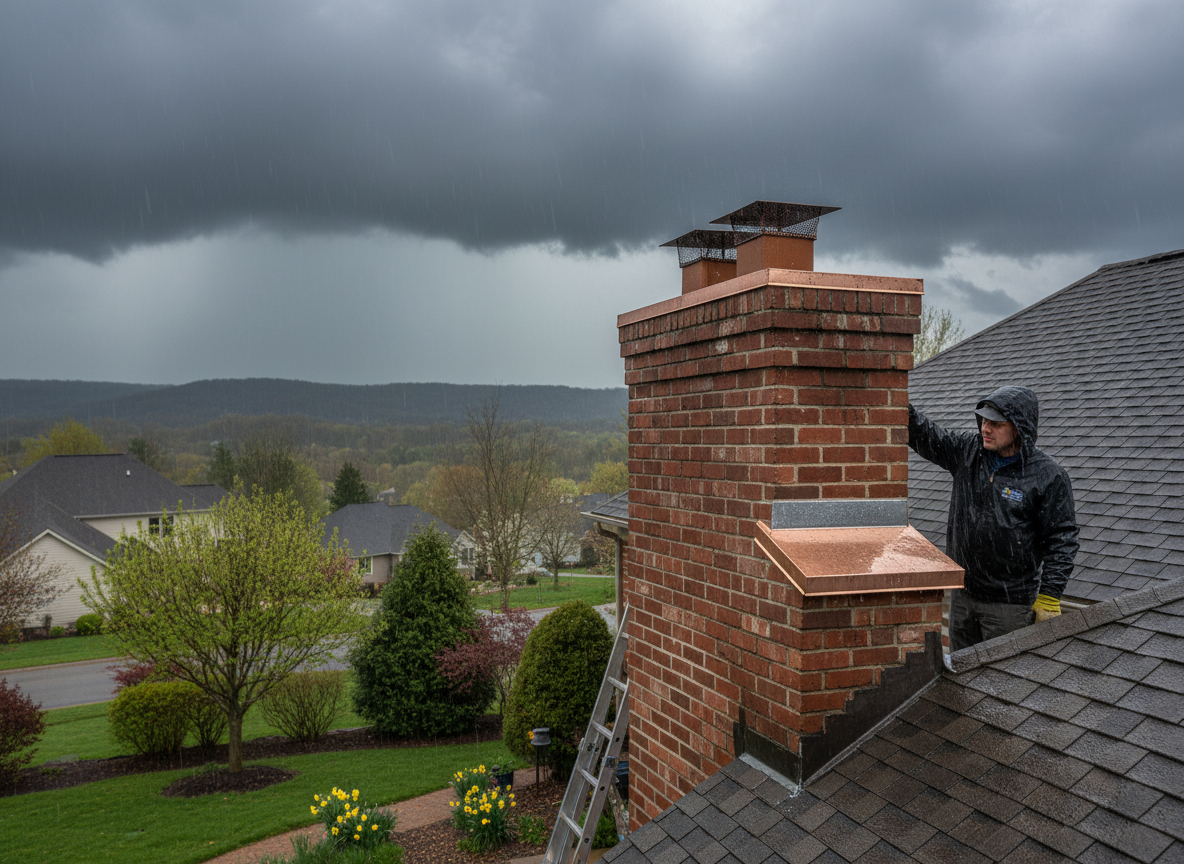
Preventing water leaks in Blue Ash chimneys during Cincinnati spring storms starts with inspecting and sealing the crown plus all flashing joints before the first heavy downpour arrives, then maintaining a waterproof barrier that handles repeated 2–4 inch rain events common from March through May.
How Cincinnati Spring Storms Affect Chimneys in Blue Ash
Blue Ash sits in Hamilton County where spring fronts stall over the Mill Creek valley and drop prolonged rain combined with 30–40 mph gusts. Homes built between 1950 and 1980 in neighborhoods such as Kenwood and Montgomery typically have brick chimneys with original mortar that has weathered 40–60 freeze-thaw cycles. Water enters at hairline cracks in the crown, travels behind loose step flashing, and pools at the roof line where the chimney meets the main structure. Once inside, moisture migrates down the flue or through brick pores, staining ceilings in second-floor rooms and accelerating creosote saturation on cooler days. Terrain in Sycamore Township adds runoff from higher lots that splashes against lower chimneys, increasing saturation time at the base.
Checking the Chimney Crown Before Storm Season
Walk the roof in late February or early March and look for missing mortar chunks or pooling water on the crown surface. A sound crown slopes outward 1/4 inch per foot and shows no visible cracks wider than 1/16 inch. In Blue Ash many pre-1970 crowns were poured without modern additives, so they absorb water quickly during the first April thunderstorm. Note any vegetation growing from the crown; roots widen gaps that let water reach the flue tile. If the crown feels soft when probed with a screwdriver, schedule chimney crown repair before the next front moves through. Homeowners in Deer Park and Madeira report that crowns left unchecked for two seasons often require full replacement after a single 3-inch rain event.
Sealing Flashing and Joints
Examine where the chimney meets the roof shingles on all four sides. Step flashing should overlap each course by at least 2 inches and sit tight against the brick. Lift a few shingles gently to check for rust holes or sealant that has dried and cracked. In Pleasant Ridge and Silverton, wind-driven rain from the southwest commonly forces water under counter flashing that was never bent correctly during original installation. Apply high-temperature silicone or polyurethane caulk rated for exterior masonry only after the joint is clean and dry. Replace any missing nails with ring-shank fasteners and cover the nail heads. These steps close the most common entry points before spring storms arrive and keep water out of the attic space above bedrooms.
Waterproofing Your Chimney Structure
Apply a breathable silane or siloxane masonry sealer to all exposed brick and mortar once temperatures stay above 50 °F for 48 hours. One coat penetrates 1/4 inch and reduces water absorption by 90 % for 5–8 years under Blue Ash conditions. Avoid film-forming sealers that trap moisture inside the brick and cause spalling the following winter. Treat the crown and flue exterior the same day so the entire assembly dries uniformly. Residents along Hunt Road and Edwards Road who reapply every six years report zero interior leaks during the heavy May storms of 2022 and 2023. Pair the treatment with chimney waterproofing on older stone or brick stacks to extend service life without full rebuilds.
Maintenance Steps for Homeowners in Areas Like Kenwood and Montgomery
Schedule an annual chimney inspection service each February so any needed chimney flashing repair finishes before April rains. Keep gutters clear so water does not overflow onto the chimney base. Trim branches within 10 feet of the stack to reduce wind-driven debris that can damage flashing. After each storm, check the attic for new water stains within 24 hours. If moisture appears, note the exact location relative to the chimney and contact a local technician rather than attempting interior patches that hide the source. These habits protect the 60–70 year old housing stock common throughout Blue Ash and surrounding communities without requiring emergency work during peak storm weeks.